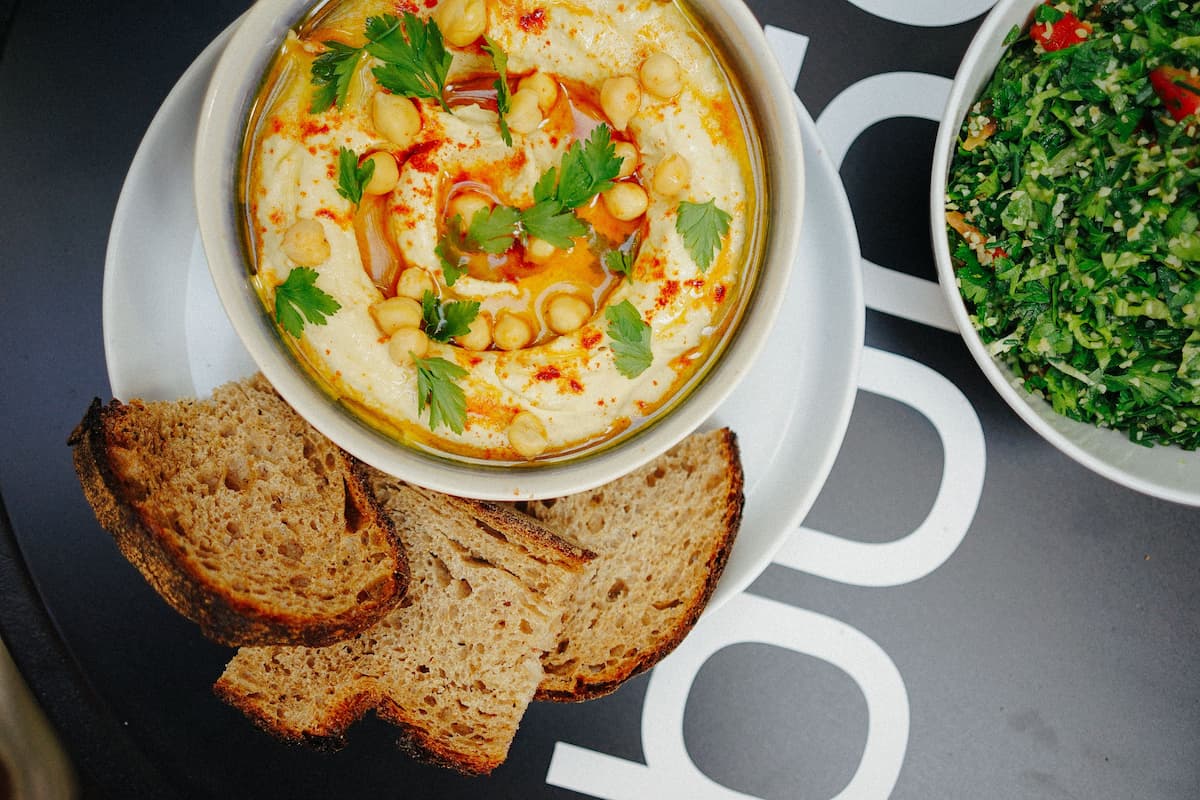
Why make hummus at home?
Hummus bi tahini is one of the best-known dishes of the Levant, and it is a genuinely nourishing food. Chickpeas provide plant protein and fibre, tahini adds healthy unsaturated fats, and lemon and garlic bring flavour without extra calories. Shop-bought and restaurant hummus can, however, contain a lot of oil and salt. Making it at home takes about ten minutes and lets you decide exactly what goes in.
Ingredients (8 servings)
- 250 g cooked chickpeas (about one 400 g can, drained and rinsed)
- 3 tablespoons tahini (about 45 g)
- Juice of 1 lemon (about 3 tablespoons)
- 1 small garlic clove
- ½ teaspoon ground cumin
- ½ teaspoon salt, or less to taste
- 4–6 tablespoons ice-cold water or chickpea cooking liquid
- 1 tablespoon extra-virgin olive oil, paprika and chopped parsley to serve
Method
- Prepare the chickpeas. If you use canned chickpeas, rinse them well under cold water. For the smoothest hummus, warm them for a few minutes in a little water and drain; you can also rub off some of the skins.
- Blend the tahini first. Put the tahini, lemon juice and garlic in a food processor and blend for about a minute until pale and thick.
- Add the chickpeas. Add the chickpeas, cumin and salt and blend for two to three minutes, scraping down the sides.
- Loosen with cold water. With the machine running, add the ice-cold water a spoonful at a time until the hummus is smooth and creamy.
- Taste and adjust. Add more lemon or cumin if needed before adding more salt.
- Serve. Spread on a plate, drizzle with the olive oil and sprinkle with paprika and parsley.
What makes this version lighter?
Many recipes blend several tablespoons of oil into the hummus. Here the creaminess comes from blending the tahini well and adding ice-cold water, and the olive oil is used only as a drizzle on top, where you can see and taste it. Rinsing canned chickpeas also removes some of their added salt.
Salt matters because most adults eat more than twice the World Health Organization's recommended limit of 5 g a day, and too much salt raises blood pressure. Lemon, garlic and cumin give this hummus plenty of flavour, so it does not need much.
Estimated nutrition per serving
Per serving of about 3 tablespoons (around 50 g), calculated from standard food-composition data for the ingredients above:
- Energy: about 100 kcal
- Protein: about 4 g
- Carbohydrate: about 10 g
- Fibre: about 3 g
- Fat: about 5.5 g, mostly unsaturated
- Sodium: about 150 mg
Values will vary with the brand of tahini, the size of your lemon and how much salt and oil you use. For comparison, a hummus recipe published by North Dakota State University Extension gives about 70 kcal, 3 g protein and 2 g fibre for a smaller 2-tablespoon serving.
How to fit hummus into a balanced diet
Hummus is nutritious, but it is still energy-dense, so the portion and what you eat it with make the difference.
- As a snack: a serving of hummus with carrot, cucumber and pepper sticks.
- As part of a meal: hummus with grilled chicken or falafel, a large salad and a small wholegrain pita.
- As a spread: in a sandwich instead of mayonnaise or butter.
- For variety: blend in roasted red pepper, beetroot or a handful of fresh herbs.
Storage and safety
Keep hummus in a covered container in the fridge and eat it within three to four days. Use a clean spoon each time. If it smells sour or looks mouldy, throw it away. People with a sesame allergy should avoid hummus made with tahini.
Nutrition values are estimates for general information. If you follow a special diet for a health condition, ask a registered dietitian how this recipe fits your plan.
Comments (0)
No comments yet. Be the first to share your thoughts!
Leave a Comment
Your comment will be reviewed before publication. Please keep it respectful and on-topic.