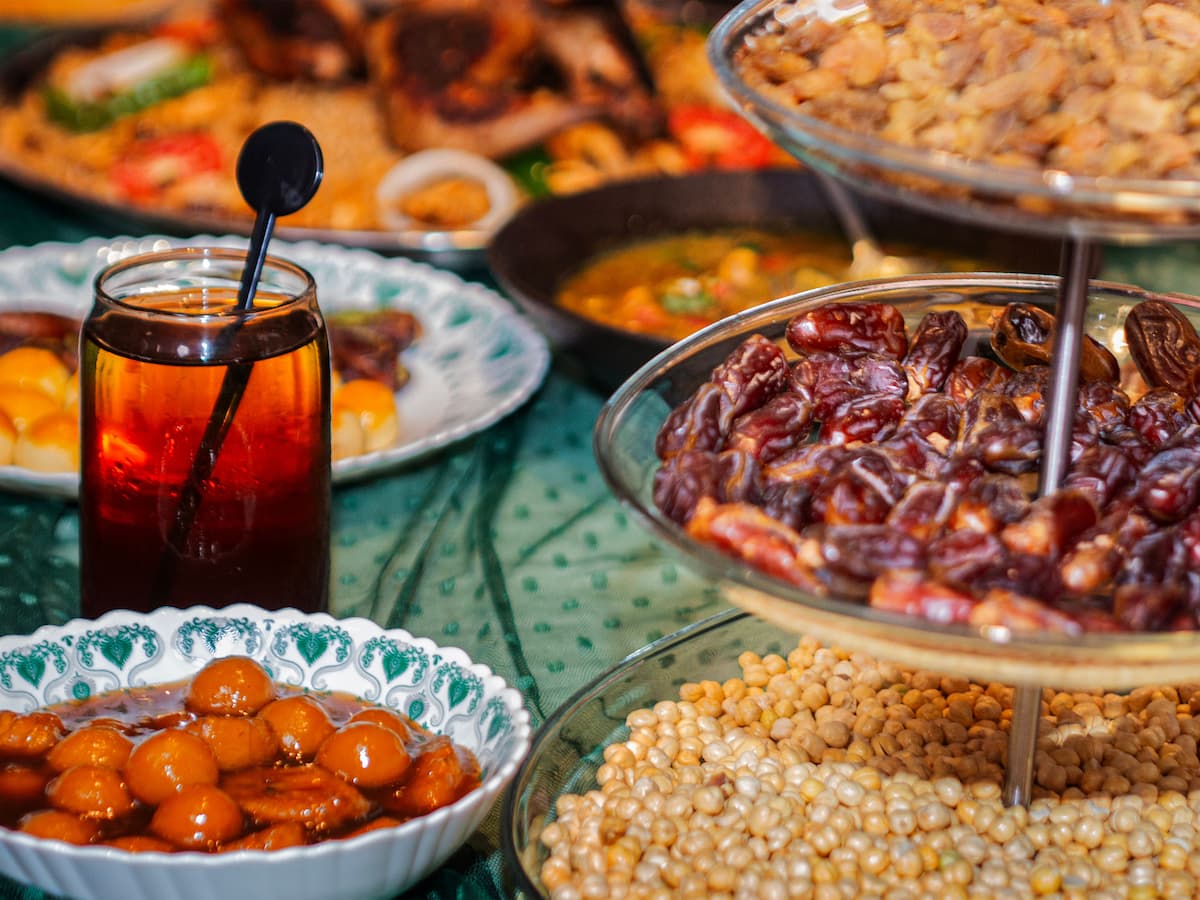
Why food choices matter more in Ramadan
During Ramadan, most adults go many hours without food or drink, and in some countries and seasons the fast lasts well over 14 hours. Your body copes well with this when the two daily meals, suhoor before dawn and iftar at sunset, give it enough fluid, steady energy and the nutrients it would normally get across a whole day. When those meals lean heavily on fried snacks, sweets and salty dishes, many people feel thirstier, more tired and more uncomfortable during the day.
The good news is that a few simple habits make a clear difference. This guide follows the advice of public-health organisations such as the British Nutrition Foundation and the World Health Organization, adapted to the foods many families already eat in Ramadan.
Suhoor: a meal that lasts
Skipping suhoor makes the fast harder, so it is worth getting up for, even if the meal is small. The aim is food that releases energy slowly and helps you stay hydrated.
- Choose higher-fibre starchy foods such as oats, wholegrain bread, brown rice or ful medames. They are digested more slowly than white bread or sugary cereals.
- Add some protein: eggs, yoghurt, labneh, cheese, beans or a handful of nuts help you feel full for longer.
- Include fluid-rich foods like yoghurt, milk, cucumber, tomatoes and fruit, alongside water.
- Go easy on salt. Pickles, salty cheese, olives and processed meats can make you thirsty later in the day.
A simple example: a bowl of overnight oats made with milk and topped with fruit and seeds, or wholegrain bread with eggs, labneh and cucumber, plus two glasses of water.
Iftar: break the fast gently
After a long fast it is tempting to eat quickly and a lot. Starting gently is easier on your stomach and helps you notice when you are full.
- Start with fluids: water first, then something light such as a few dates, a piece of fruit or a bowl of lentil or vegetable soup.
- Pause before the main meal. A short break, for prayer for example, gives your body time to settle.
- Build a balanced plate: about half vegetables or salad, a quarter starchy food such as rice, bulgur or bread, and a quarter protein such as chicken, fish, meat, eggs or beans.
- Eat slowly and stop when you are comfortably full rather than completely full.
Staying hydrated between iftar and suhoor
Mild dehydration is common during Ramadan and can cause headaches, tiredness and poor concentration. It is usually not harmful if you rehydrate after the fast, but it is easier to prevent than to fix.
- Spread your drinks across the evening instead of drinking a large amount at once.
- Water, milk, laban and soups all count towards your fluid intake.
- Sugary drinks such as qamar al-din and jallab are fine in a small glass, but they add a lot of sugar if you drink several.
- Strong tea and coffee late at night can disturb sleep. If you usually drink a lot of caffeine, cutting down gradually in the weeks before Ramadan can reduce headaches.
- Keep salty foods low. The World Health Organization recommends less than 5 g of salt a day for adults, and most people eat more than twice that.
Fried and sweet foods: enjoy, but in small amounts
Samosas, kibbeh, qatayef and kunafa are part of the Ramadan table for many families, and there is no need to give them up. The difference comes from how often and how much. Having one or two pieces rather than a plate, saving desserts for some nights rather than every night, and baking or air-frying instead of deep-frying can noticeably reduce the fat and sugar in your week.
Staying active
Hard exercise during the fasting hours is not a good idea, especially in hot weather. A light walk after iftar can help digestion and ease constipation, and if you usually train, a lighter session after iftar or shortly before suhoor is easier to manage.
Who should get medical advice first
Fasting is not expected of people whose health could be harmed by it. Talk to your doctor or healthcare team before Ramadan if you:
- have diabetes, especially if you use insulin or tablets that can cause low blood sugar;
- are pregnant or breastfeeding;
- have kidney disease, heart disease or another long-term condition;
- take medicines that need to be taken at set times or with food.
Diabetes UK advises people with diabetes who fast to agree a plan with their healthcare team, check their blood sugar more often, and break the fast if their blood sugar falls below 4 mmol/L or rises above the level their team has set. Anyone who feels faint, confused or very unwell while fasting should stop, drink and seek help.
A sample day
- Suhoor: overnight oats with milk, banana and chia seeds, or wholegrain bread with two eggs, labneh and cucumber; two glasses of water.
- Iftar: water, three dates and a bowl of lentil soup; then grilled chicken or fish, a large fattoush salad and a portion of bulgur or rice.
- Evening: water and a piece of fruit; a small dessert on some nights.
This article is for general information and does not replace advice from your doctor or a registered dietitian.



Comments (0)
No comments yet. Be the first to share your thoughts!
Leave a Comment
Your comment will be reviewed before publication. Please keep it respectful and on-topic.