What was the question?
In adults at elevated cardiovascular risk, does a Mediterranean diet supplemented with extra-virgin olive oil or nuts reduce major cardiovascular events compared with control dietary advice?
Published with a correction
Primary Prevention of Cardiovascular Disease with a Mediterranean Diet Supplemented with Extra-Virgin Olive Oil or Nuts
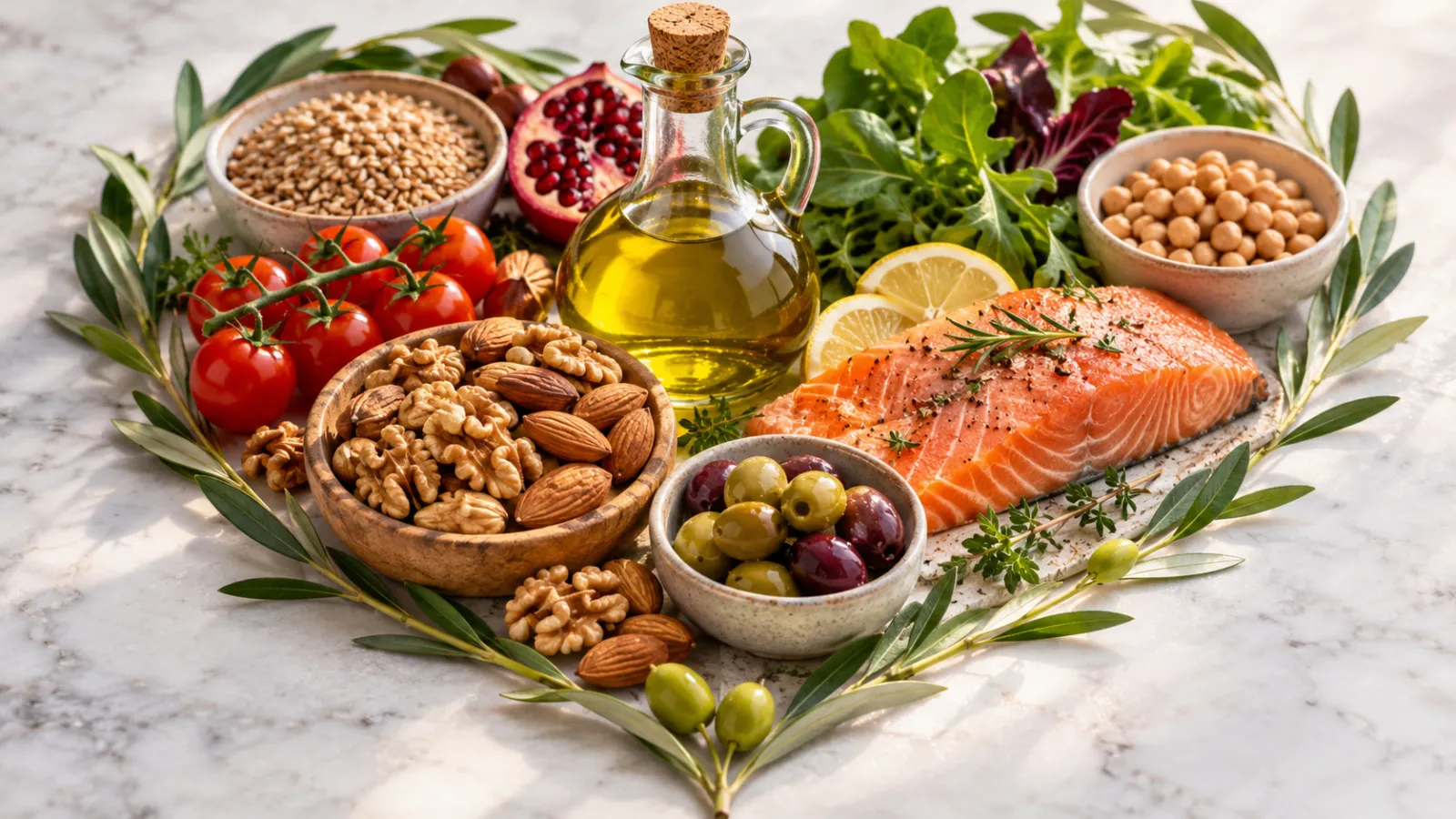
The corrected 2018 PREDIMED analysis reported fewer major cardiovascular events with Mediterranean dietary patterns supplemented with extra-virgin olive oil or nuts than with control dietary advice. Adjusted hazard ratios were 0.69 and 0.72, respectively. The 2013 report was withdrawn after randomization deviations were discovered.
Primary Prevention of Cardiovascular Disease with a Mediterranean Diet Supplemented with Extra-Virgin Olive Oil or Nuts
In adults at elevated cardiovascular risk, does a Mediterranean diet supplemented with extra-virgin olive oil or nuts reduce major cardiovascular events compared with control dietary advice?
A multicenter study in Spain compared Mediterranean dietary patterns supplemented with extra-virgin olive oil or nuts against control advice to reduce dietary fat. Participants received ongoing education and support. Median follow-up was 4.8 years. The findings were reanalyzed after departures from random allocation procedures were identified.
Major cardiovascular events occurred in 96 participants (3.8%) assigned to olive oil, 83 (3.4%) assigned to nuts, and 109 (4.4%) assigned to control. Adjusted HR was 0.69 (95% CI 0.53–0.91) for olive oil and 0.72 (0.54–0.95) for nuts versus control.
The study included 7,447 Spanish adults aged 55–80 who were at high cardiovascular risk but did not have cardiovascular disease at baseline. Results should not be directly generalized to children, young adults or low-risk populations.
The findings support consideration of overall Mediterranean dietary patterns in primary prevention for people resembling the participants. They do not isolate the effect of any single food.
The trial cannot establish that olive oil or nuts alone caused the result. A hazard ratio of 0.69 is not a 31-percentage-point absolute risk reduction. Corrected analyses do not erase the original randomization limitations.
For researchers and health professionals. Figures are taken from the original paper; check it before citing them.
| Outcome | Estimate | P | Chart of the estimate and its confidence interval |
|---|---|---|---|
| Mediterranean diet + olive oil vs control vs Olive oil vs control · Median 4.8 years · source: 2018 corrected PubMed abstract, Results | 0.69 (95% CI 0.53 – 0.91) | — | |
| Mediterranean diet + nuts vs control vs Nuts vs control · Median 4.8 years · source: 2018 corrected PubMed abstract, Results | 0.72 (95% CI 0.54 – 0.95) | — | |
|
0.5
1
|
|||
To compare major cardiovascular outcomes under two Mediterranean dietary interventions with control dietary advice among high-risk adults.
Multicenter dietary intervention involving three groups and a composite primary endpoint of myocardial infarction, stroke or cardiovascular death. The 2018 report revised the analysis to address deviations from randomization procedures.
7,447 participants in Spain aged 55–80; 57% women; high cardiovascular risk with no known cardiovascular disease at baseline.
Mediterranean diet supplemented with extra-virgin olive oil; Mediterranean diet supplemented with mixed nuts; or advice to reduce dietary fat in the control group.
Across median 4.8-year follow-up, 288 primary endpoint events were recorded: olive oil n=96 (3.8%), nuts n=83 (3.4%), control n=109 (4.4%). Figures are from the corrected 2018 publication.
Olive oil vs control: adjusted HR 0.69 (95% CI 0.53–0.91); nuts vs control: adjusted HR 0.72 (95% CI 0.54–0.95). HR is a relative time-to-event estimate, not an absolute percentage-point difference.
The initial trial deviated from random allocation at some sites and among certain household members. The 2013 report was withdrawn. Findings come from high-risk Spanish adults and multifactorial dietary interventions.
Randomization deviations are a substantive concern. The 2018 article used adjusted analyses and sensitivity checks, but no independent validated overall risk-of-bias assessment has been performed for this VitaNova record.
The PubMed abstract identifies Instituto de Salud Carlos III, the Spanish Ministry of Health and other sources; consult the full paper for complete disclosures before approval.
Detailed individual conflict disclosures have not been independently verified for this import draft; check the full source before publication.
The full text is available from the publisher through the links above.
Ramón Estruch, Emilio Ros, Jordi Salas-Salvadó, Maria-Isabel Covas, Dolores Corella, Fernando Arós, Enrique Gómez-Gracia, Valentina Ruiz-Gutiérrez, Miquel Fiol, José Lapetra, Rosa M. Lamuela-Raventos, Lluís Serra-Majem, Xavier Pintó, Josep Basora, Miguel A. Muñoz, José V. Sorlí, J. Alfredo Martínez, Montserrat Fitó, Alfredo Gea, & … Miguel A. Martínez-González (2018). Primary Prevention of Cardiovascular Disease with a Mediterranean Diet Supplemented with Extra-Virgin Olive Oil or Nuts. The New England Journal of Medicine, 378(25), e34. https://doi.org/10.1056/nejmoa1800389
APA style, generated from the paper’s bibliographic record.
VitaNova Editorial Team
This summary is for general education and is not medical advice. Talk to a doctor or dietitian before changing your diet. Medical disclaimer