
Coffee and tea are part of daily life and hospitality across the Arab world. Caffeine can boost alertness and focus, but its effects last much longer than many people expect, and that can quietly affect your sleep.
How long does caffeine last?
Caffeine has a half-life of about five hours in most healthy adults, but it can range from roughly two to ten hours depending on genetics, medications, smoking and pregnancy. Half-life means that after about five hours, half of the caffeine is still in your body.
So if you drink a strong coffee at 6 pm, a meaningful amount may still be active at 11 pm or midnight.
What the research says
A well-known 2013 study gave adults 400 mg of caffeine at bedtime, three hours before, or six hours before sleep. Even the six-hours-before dose reduced total sleep time by about one hour, and many participants did not notice the difference themselves.
How much caffeine is in common drinks?
| Drink | Approx. caffeine |
|---|---|
| Espresso (single shot) | 60–75 mg |
| Filter or drip coffee (240 ml) | 80–100 mg |
| Instant coffee (1 cup) | 60–80 mg |
| Turkish coffee (small cup) | 50–70 mg |
| Arabic (Gulf) coffee, small finjan | 10–30 mg per cup, but many cups add up |
| Black tea (1 cup) | 40–50 mg |
| Green tea (1 cup) | 25–35 mg |
| Cola (330 ml can) | 30–40 mg |
| Energy drink (250 ml) | about 80 mg |
| Dark chocolate (30 g) | 20–25 mg |
Amounts vary a lot by brand, bean type and brewing method, so treat these as estimates.
How much is safe per day?
For most healthy adults, health authorities such as the U.S. FDA and the European Food Safety Authority consider up to about 400 mg a day to be generally safe. During pregnancy, a limit of 200 mg a day is usually advised. People with heart rhythm problems, anxiety disorders, high blood pressure or reflux may need less.
A simple cut-off time
- For most people: have your last caffeinated drink at least 6 hours before bed. If you sleep at 11 pm, that means around 4–5 pm.
- If you are sensitive to caffeine or have insomnia: try a cut-off around noon to 2 pm.
Easy swaps for the evening
- Decaffeinated coffee (contains a small amount of caffeine).
- Herbal teas: mint, chamomile, anise, sage, or cinnamon.
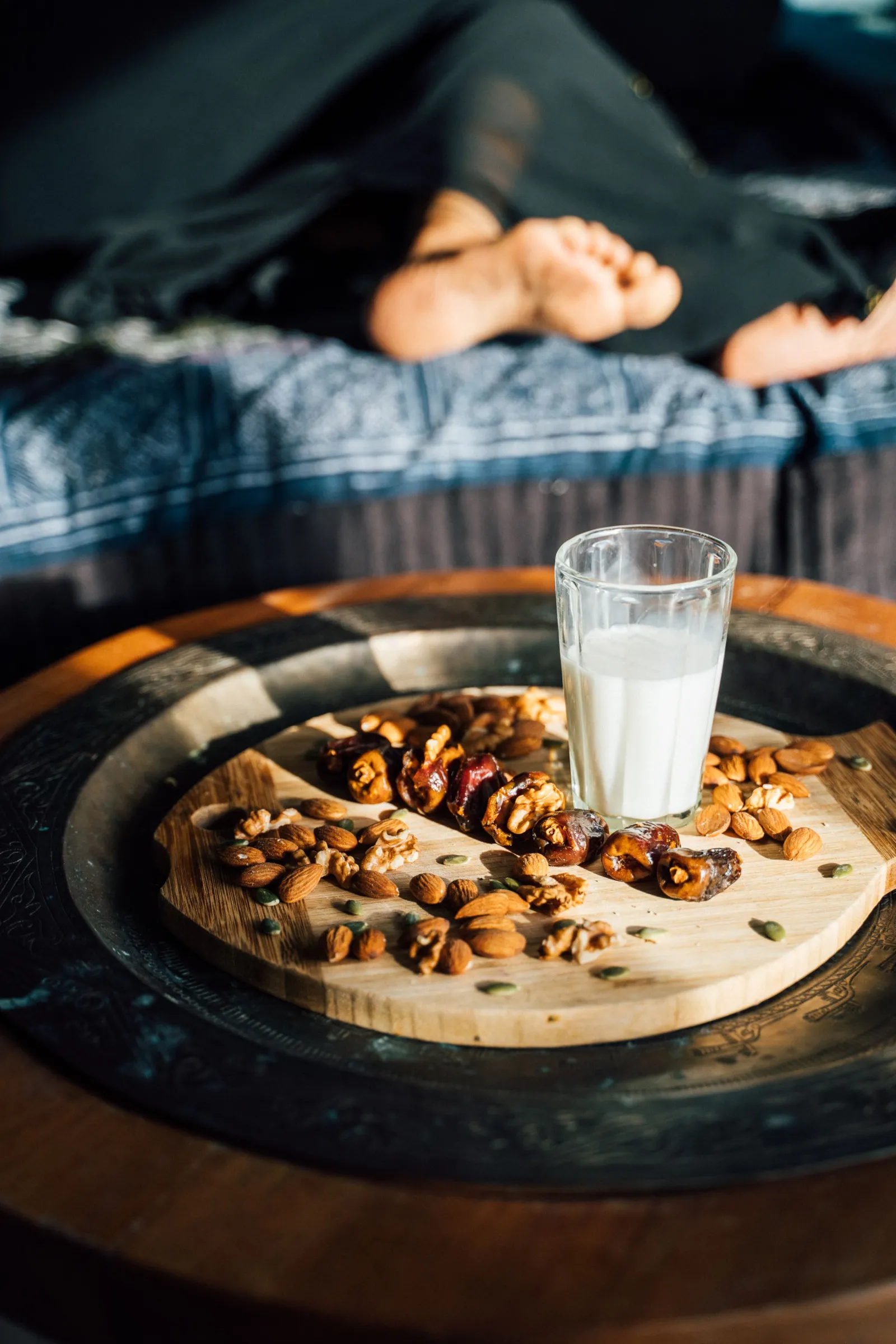
- Warm milk with cardamom.
- Sparkling water with lemon instead of cola.
Signs you may be having too much
Jitters, a racing heart, anxiety, headaches when you skip coffee, heartburn and trouble sleeping can all be signs to cut back. Reduce gradually over a week or two to avoid withdrawal headaches.
FAQ
How many hours before bed should I stop drinking coffee?
For most people, at least six hours before bed. Sensitive people or those with insomnia may do better with a cut-off around midday.
Does tea have less caffeine than coffee?
Usually yes. A cup of black tea has about 40–50 mg, compared with 80–100 mg in a cup of filter coffee, but several strong cups of tea can add up.
How much caffeine is too much?
For most healthy adults, up to about 400 mg a day is considered generally safe. In pregnancy, the usual advice is to stay below 200 mg a day.

Comments (0)
No comments yet. Be the first to share your thoughts!
Leave a Comment
Your comment will be reviewed before publication. Please keep it respectful and on-topic.