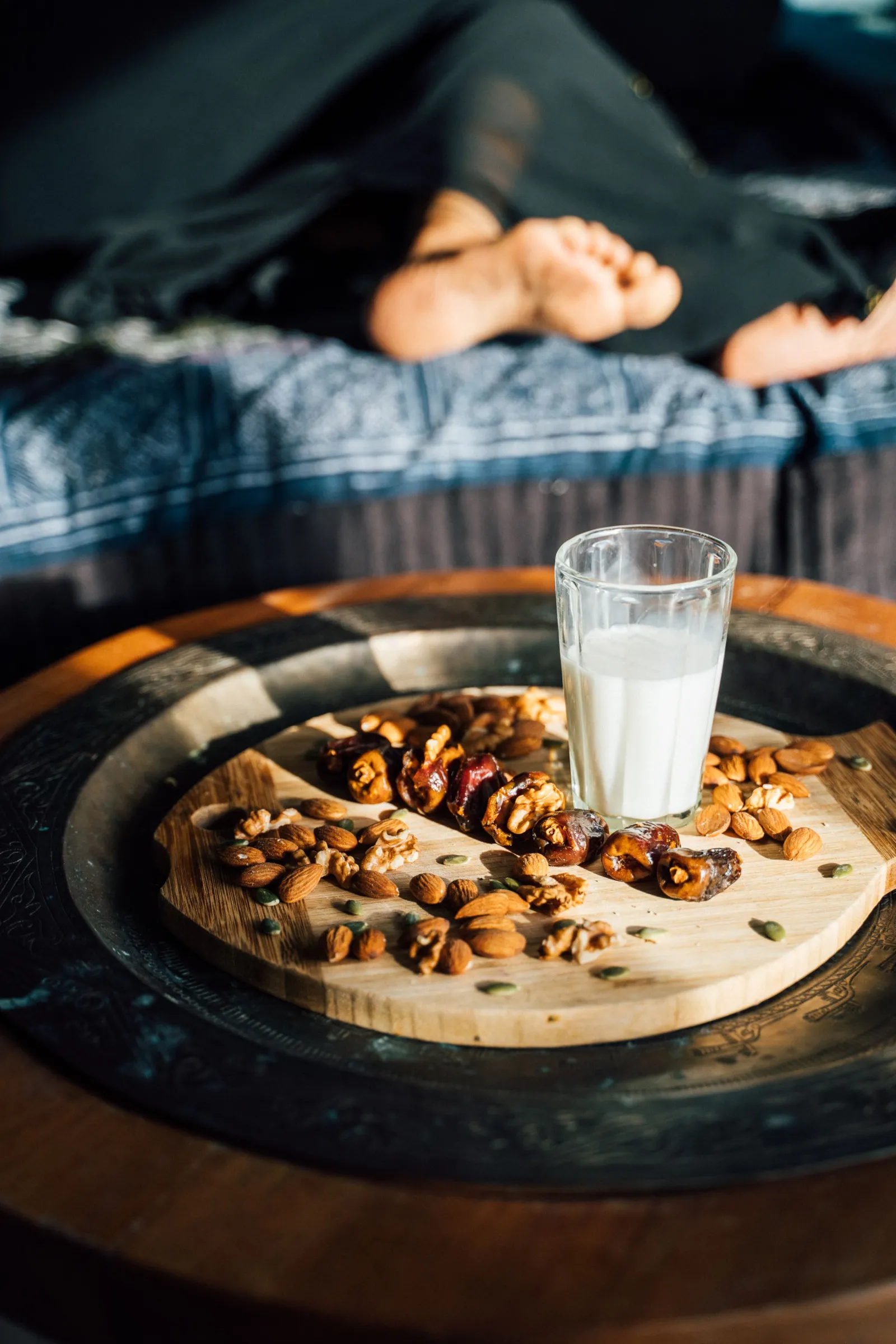
In many Arab homes, dinner is late and generous, and evenings often include tea, coffee and sweets with family. Enjoying these moments matters. But if you often struggle to fall asleep or wake up during the night, your evening eating habits are worth a look.
Timing: leave two to three hours
A large meal right before lying down can cause discomfort and, for some people, heartburn or reflux, which can disturb sleep. A practical habit is to finish your main evening meal two to three hours before bed. If you are hungry later, a small snack is fine.
What to avoid in the evening
| Food or drink | Why it can affect sleep |
|---|---|
| Coffee, strong tea, energy drinks, cola | Caffeine can stay active for many hours and make it harder to fall asleep. |
| Very large or fatty meals | Slow digestion and possible reflux. |
| Spicy food | Can trigger heartburn in some people. |
| Lots of sweets | Can cause energy swings for some people; often eaten in large amounts at night. |
| A lot of fluid right before bed | Can wake you up to use the bathroom. |
Caffeine deserves special attention: one study found that 400 mg of caffeine taken even six hours before bed reduced total sleep by about an hour. Many people do not realise that black tea, Arabic coffee, cola and chocolate also contain caffeine.
Good light snacks if you are hungry
Choose something small, around 150–200 kcal, that combines a little protein or fat with some carbohydrate:
- A small bowl of yogurt or laban.
- A glass of warm milk.
- A banana with a teaspoon of peanut butter.
- Two dates with a few almonds.
- One slice of whole-grain toast with a little labneh.
- A small handful of nuts.
- A kiwi or two: a few small studies found eating kiwifruit before bed was linked with better sleep, though more research is needed.
Do certain foods really help sleep?
You may hear that foods rich in tryptophan (such as milk, turkey or bananas) make you sleepy. Tryptophan is used to make serotonin and melatonin, but the amounts in normal food portions are modest. The bigger benefits come from regular meal timing, avoiding late caffeine and not going to bed overly full or very hungry.
Herbal drinks such as chamomile or anise are caffeine-free and can be part of a calming bedtime routine.
Beyond food: a simple sleep routine
- Keep a regular bedtime and wake time, even at weekends.
- Dim the lights and put your phone away 30–60 minutes before bed.
- Keep the bedroom cool, dark and quiet.
- Get daylight in the morning and some movement during the day.
When to see a doctor
If you regularly take more than 30 minutes to fall asleep, wake up often, snore loudly or feel very tired during the day despite enough time in bed, talk to a doctor. Problems such as insomnia, sleep apnoea and reflux disease are common and treatable.
FAQ
How long should I wait to sleep after eating?
Two to three hours after a main meal is a sensible habit, especially if you get heartburn. A small snack closer to bedtime is usually fine.
Is it bad to go to bed hungry?
Strong hunger can make it harder to fall asleep. If you are hungry, a small snack of about 150–200 kcal, such as yogurt or a banana with nuts, is a good option.
Does warm milk help you sleep?
There is limited strong evidence, but a warm, caffeine-free drink can be part of a relaxing routine that helps some people wind down.


Comments (0)
No comments yet. Be the first to share your thoughts!
Leave a Comment
Your comment will be reviewed before publication. Please keep it respectful and on-topic.