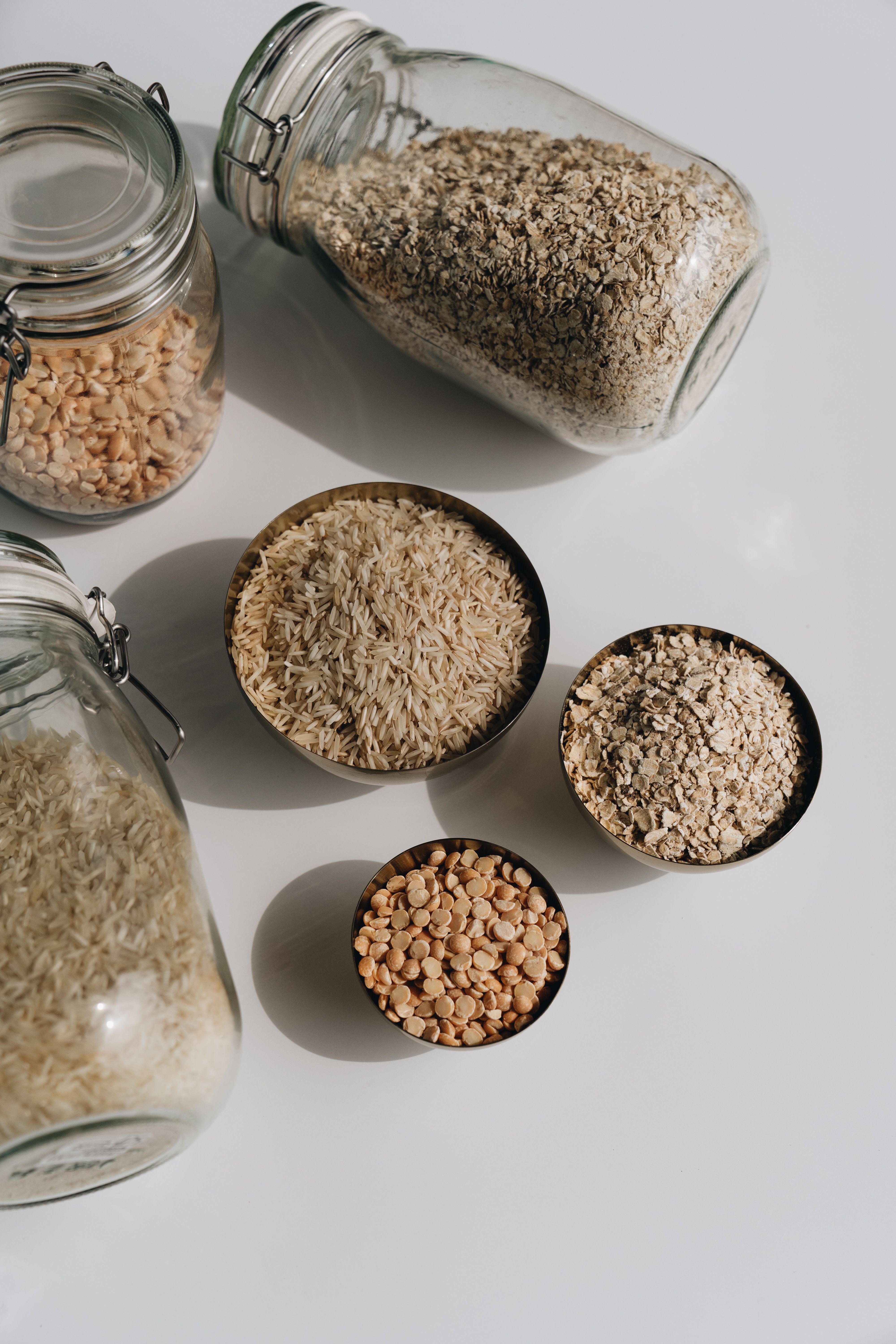
Fibre is the part of plant foods that your body cannot fully digest. That may sound unimportant, but fibre plays a big role in digestion, heart health, blood sugar and fullness. Surveys in many countries show that most adults eat well below the recommended amount.
How much fibre do you need?
| Group | Recommended daily fibre |
|---|---|
| Adult women | About 25 g |
| Adult men | About 30–38 g |
| A simple rule | About 14 g per 1,000 kcal eaten |
These figures come from the U.S. Institute of Medicine and Dietary Guidelines for Americans. The WHO recommends at least 25 g a day for adults, and the UK suggests 30 g.
Why fibre matters
- Digestion: fibre adds bulk to stool and helps prevent constipation.
- Gut bacteria: many fibres are food for helpful gut bacteria, which produce compounds that support the gut lining.
- Heart health: soluble fibre, found in oats, barley and legumes, can help lower LDL cholesterol.
- Blood sugar: fibre slows the absorption of sugar, which helps keep blood sugar steadier.
- Fullness: high-fibre meals are more filling for fewer calories, which helps with weight management.
- Long-term health: large reviews link higher fibre intake with lower risk of heart disease, type 2 diabetes and colorectal cancer.
High-fibre foods from our kitchen
| Food | Portion | Approx. fibre |
|---|---|---|
| Lentils, cooked | 1 cup | 15 g |
| Chickpeas, cooked | 1 cup | 12 g |
| Foul (fava beans), cooked | 1 cup | 9 g |
| Bulgur, cooked | 1 cup | 8 g |
| Freekeh, cooked | 1 cup | about 8 g |
| Wholewheat pita | 1 medium | 4–5 g |
| Oats | 50 g dry | 5 g |
| Artichoke, cooked | 1 medium | 7 g |
| Okra (bamia), cooked | 1 cup | 4 g |
| Pear, with skin | 1 medium | 5–6 g |
| Dates | 3 dates | 2 g |
| Almonds | 30 g | 3.5 g |
A sample day with about 30 g of fibre
- Breakfast: foul with olive oil and cumin, half a wholewheat pita (about 11 g)
- Lunch: mujaddara with salad (about 12 g)
- Snack: an apple or pear (about 5 g)
- Dinner: grilled chicken with roasted vegetables (about 4 g)
Total: about 32 g
How to increase fibre without discomfort
- Go slowly: add a few grams each day over two to three weeks.
- Drink more water: fibre works best with enough fluid.
- Spread it out: have some fibre at each meal rather than all at once.
- Swap, do not just add: white bread to wholewheat, white rice to bulgur or freekeh, juice to whole fruit.
- Keep skins on fruit and vegetables when possible.
Do you need fibre supplements?
Most people can meet their needs with food, which also brings vitamins, minerals and other plant compounds. Supplements such as psyllium can help some people with constipation or high cholesterol; ask your doctor or pharmacist first, especially if you take medicines.
FAQ
How much fibre should I eat per day?
About 25 g for adult women and 30–38 g for adult men, or roughly 14 g for every 1,000 kcal you eat.
Which Arabic foods are highest in fibre?
Lentils, chickpeas, foul, bulgur, freekeh, artichokes, okra and wholewheat bread are all excellent sources.
Can too much fibre cause problems?
Increasing fibre too quickly can cause gas and bloating. Raising it gradually and drinking enough water usually prevents this.


Comments (0)
No comments yet. Be the first to share your thoughts!
Leave a Comment
Your comment will be reviewed before publication. Please keep it respectful and on-topic.