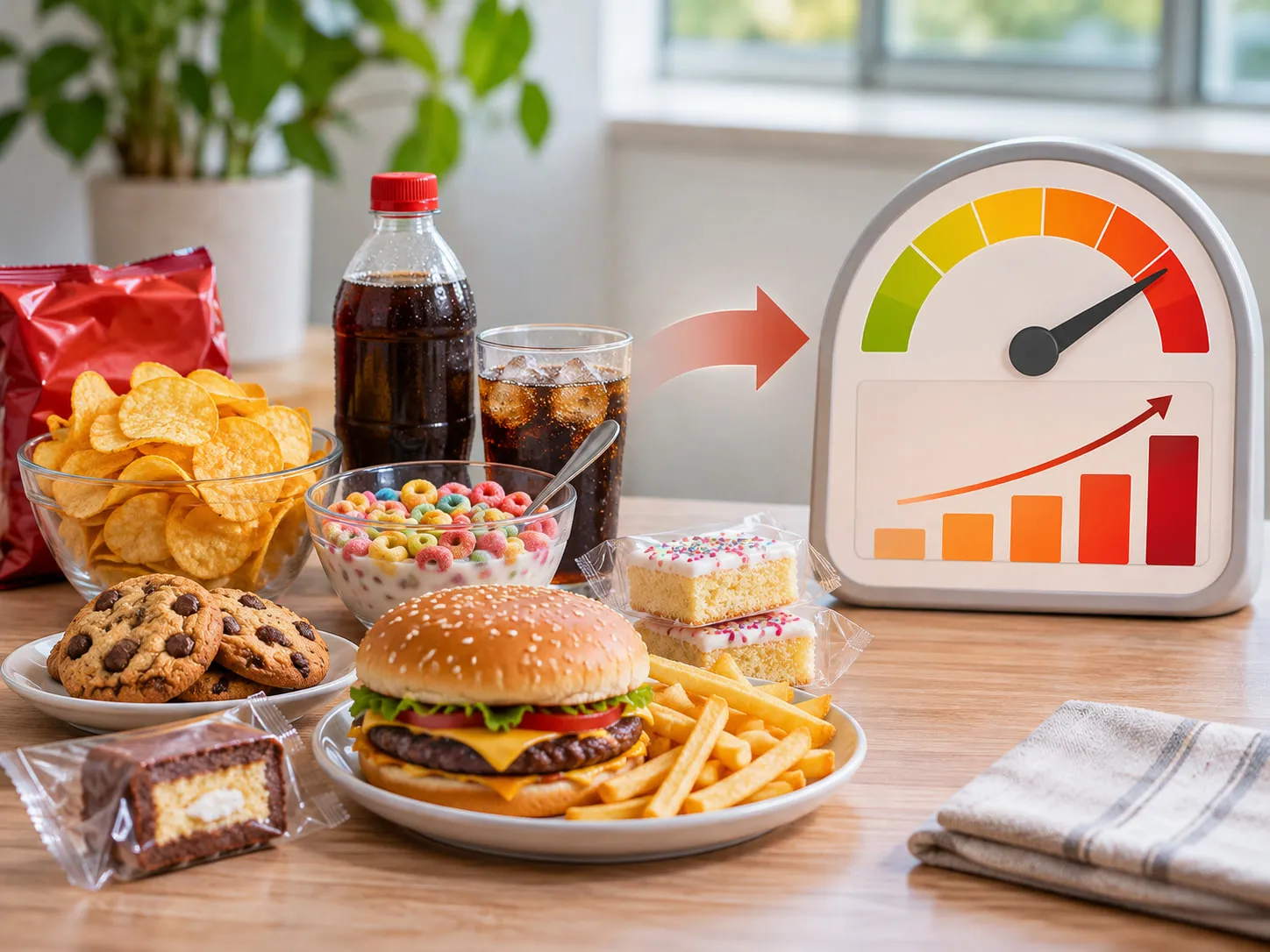
What was the question?
Can increasing sleep in adults who habitually sleep too little reduce energy intake without prescribing a diet?
Published research
Effect of Sleep Extension on Objectively Assessed Energy Intake Among Adults With Overweight in Real-life Settings: A Randomized Clinical Trial
In a randomized trial of 80 adults with overweight and habitual sleep under 6.5 hours, two weeks of sleep-extension counseling reduced estimated energy intake by 270 kcal/day relative to control (95% CI −393 to −147). The trial does not establish sustained long-term weight loss.
Effect of Sleep Extension on Objectively Assessed Energy Intake Among Adults With Overweight in Real-life Settings: A Randomized Clinical Trial
Can increasing sleep in adults who habitually sleep too little reduce energy intake without prescribing a diet?
After two weeks of habitual sleep monitoring, participants were randomized to individualized sleep-hygiene counseling intended to extend bedtime or to continue their usual sleep habits for two weeks. They lived at home with no prescribed dietary or activity change. Energy intake was estimated from objectively measured expenditure plus changes in body energy stores.
Relative to control, sleep increased by approximately 1.2 hours/night (95% CI 1.0–1.4), while estimated energy intake fell by 270 kcal/day (95% CI −393 to −147); P<.001. There was no statistically significant treatment effect on total energy expenditure.
The trial enrolled 80 adults aged 21–40 with BMI 25–29.9 kg/m² and habitual sleep below 6.5 hours/night. Findings should not automatically be extrapolated to people who already sleep adequately.
For some adults whose sleep is chronically curtailed, improving sleep may contribute to a short-term reduction in energy intake. It can be one supportive component of health behavior, not a substitute for individualized nutrition care.
Two weeks of intervention cannot show sustained year-long weight loss or that every individual will consume exactly 270 fewer calories daily. Energy intake was estimated objectively from expenditure and stored energy changes, not by directly weighing all consumed meals.
For researchers and health professionals. Figures are taken from the original paper; check it before citing them.
| Outcome | Estimate | P | Chart of the estimate and its confidence interval |
|---|---|---|---|
| Between-group estimated daily energy intake vs Sleep-extension intervention vs control · 2-week intervention · source: Tasali et al. 2022, PubMed abstract, Results | -270 (95% CI -393 – -147) | <0.001 | |
|
-400
-300
-200
-100
0
|
|||
| Outcome | Estimate | P | Chart of the estimate and its confidence interval |
|---|---|---|---|
| Between-group sleep duration difference vs Sleep-extension intervention vs control · 2-week intervention · source: Tasali et al. 2022, PubMed abstract, Results | 1.2 (95% CI 1 – 1.4) | <0.001 | |
|
-0.5
0
0.5
1
1.5
|
|||
To test the impact of extending sleep duration on objectively estimated energy intake, expenditure and body weight in adults with overweight who habitually curtail sleep.
Single-center randomized controlled trial in everyday home settings, with a two-week habitual-sleep baseline and a two-week assigned sleep-extension or control period; intention-to-treat analysis.
80 participants aged 21–40, BMI 25.0–29.9 kg/m², habitual sleep <6.5 hours/night; mean age 29.8 years, 51.3% men.
Individualized sleep-hygiene counseling to extend time in bed compared with continued habitual sleep. No prescribed diet or exercise change.
Between-group sleep duration difference approximately +1.2 hours/night (95% CI 1.0–1.4); estimated energy intake difference −270 kcal/day (95% CI −393 to −147). Total energy expenditure was not significantly different.
Two separate MD measures with different units: sleep +1.2 hours/night (95% CI 1.0–1.4) and energy intake −270 kcal/day (95% CI −393 to −147). Do not plot on the same numeric axis or extrapolate beyond follow-up.
Only two intervention weeks, one center, a relatively small and age-restricted sample, and a population specifically selected for short habitual sleep. Energy intake was estimated by an indirect but objective energy-balance method.
Randomization addresses selection bias but a behavioral sleep intervention cannot fully blind participants. No formal independent RoB 2 assessment has been completed for this VitaNova draft.
Verify precise funding and grant disclosures against the full publication before editorial approval; unverified award numbers have deliberately not been entered.
PubMed records no reported conflict of interest (None reported); reconfirm against the full paper before approval.
The full text is available from the publisher through the links above.
Esra Tasali, Kristen Wroblewski, Eva Kahn, Jennifer Kilkus, & Dale A. Schoeller (2022). Effect of Sleep Extension on Objectively Assessed Energy Intake Among Adults With Overweight in Real-life Settings: A Randomized Clinical Trial. JAMA Internal Medicine, 182(4), 365-374. https://doi.org/10.1001/jamainternmed.2021.8098
APA style, generated from the paper’s bibliographic record.
VitaNova Editorial Team
This summary is for general education and is not medical advice. Talk to a doctor or dietitian before changing your diet. Medical disclaimer